Research News | August 2026
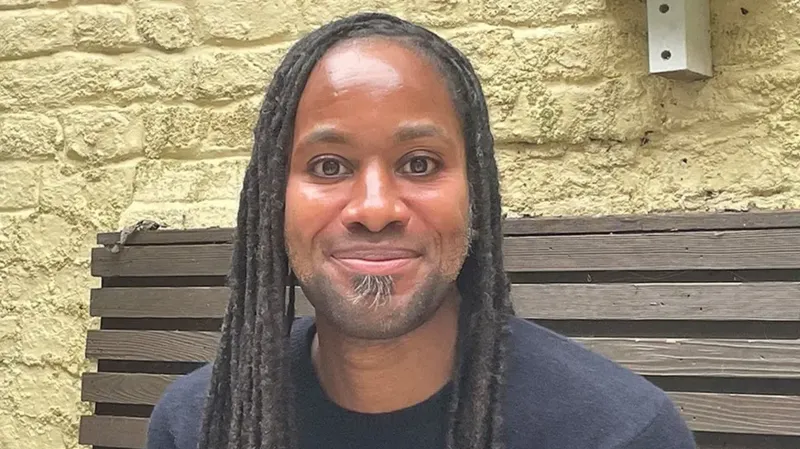
The controversy surrounding Professor Jason Arday has intensified debate about research integrity, plagiarism detection and institutional oversight in higher education, following allegations concerning aspects of his doctoral research and academic record.
Arday, a sociologist who became the youngest Black person appointed to a professorship at the University of Cambridge, resigned from the university in August 2026 amid growing scrutiny. His departure followed Cambridge's announcement that it had opened an investigation after receiving new information concerning his academic qualifications and honorary appointments.
Arday has disputed allegations of academic misconduct and has maintained that his resignation should not be interpreted as an admission of wrongdoing.
Questions Surrounding the PhD Thesis
A major focus of the controversy is Arday's 2015 doctoral thesis, completed at Liverpool John Moores University.
Recent reports have raised questions about passages alleged to resemble material contained in an earlier doctoral dissertation. Retraction Watch reported allegations that dozens of passages in Arday's dissertation closely matched wording from a 2009 dissertation by another researcher. Questions have also been raised about material appearing in some of his published academic work.
These claims require an important distinction.
Similarity between texts does not, by itself, establish plagiarism.
Determining plagiarism requires examination of the matched passages, their sources, quotations, citations, attribution and context.
Arday has maintained that previous examinations of allegations involving his research did not find him guilty of plagiarism or academic misconduct. Liverpool John Moores University and academic journals had previously considered concerns relating to his work.
The current controversy should therefore be reported as involving allegations of plagiarism and research-integrity concerns, rather than treating plagiarism as an established institutional finding where such a finding has not been made.
Cambridge Opens Investigation
The controversy subsequently expanded beyond individual passages in Arday's academic work.
The University of Cambridge announced an investigation after receiving new information relating to his academic qualifications and honorary appointments. Arday later resigned from his position.
The university has also moved to examine the circumstances surrounding his appointment, turning the controversy into a broader discussion about how universities verify qualifications and evaluate candidates for senior academic positions.
The case consequently raises questions extending beyond one researcher or one doctoral thesis. These include credential verification, academic recruitment, research-integrity procedures, doctoral supervision and institutional accountability.
What Researchers Can Learn From the Case
Whatever the eventual conclusions concerning the allegations, the controversy provides important lessons for researchers.
Proper attribution should be treated as part of the research process from the beginning rather than something addressed only when preparing the final reference list.
Researchers should clearly identify direct quotations, acknowledge the original sources of ideas, distinguish their analysis from the work of previous authors and maintain accurate records of materials consulted during research.
Manuscripts, dissertations and theses should also undergo appropriate originality checks before submission.
However, universities should avoid reducing research integrity to a single similarity percentage.
A Stronger Research-Integrity Process
An effective assessment process should combine several stages:
Similarity detection → source identification → passage-by-passage review → citation assessment → contextual examination → expert academic judgment
A document with a similarity score of 20% is not automatically plagiarised.
Much of that percentage could originate from properly quoted material, references, standard terminology or correctly attributed sources.
Conversely, a document with a relatively low overall similarity score could still contain a small but academically significant unattributed passage.
Plagiarism Detection Is Becoming a Computational Research Problem
The controversy also highlights the increasing importance of computational approaches to research integrity.
Modern originality systems can employ exact-text matching, document fingerprinting, n-gram analysis, fuzzy matching and semantic similarity to identify relationships between documents.
These technologies can substantially improve the ability of universities, journals and researchers to locate potentially problematic passages.
Nevertheless, plagiarism-detection software should primarily identify material requiring human examination. It should not serve as the final judge of whether academic misconduct occurred.
Similarity ≠ Plagiarism
A more appropriate framework is:
Detected similarity + source context + attribution analysis + expert assessment → research-integrity decision
This distinction is important both for protecting original authors and preventing researchers from being wrongly accused because of an automated similarity score.
AI Detection Introduces Another Challenge
The rapid adoption of generative artificial intelligence has added another dimension to academic-integrity assessment.
Universities, publishers and researchers increasingly use software claiming to estimate whether text may have been generated or substantially assisted by artificial intelligence.
Such results require even greater caution.
An AI detector assigning a high probability to a passage does not establish that its author used generative AI. Detection systems can produce false positives, while editing, translation, paraphrasing and other transformations can affect their results.
Three Questions Universities Should Separate
Is the submitted material similar to an existing source?
Has that source been appropriately acknowledged?
Are there indicators suggesting that generative AI may have contributed to the writing?
These questions concern different forms of evidence and should not be combined into a single misconduct score.
A Wider Question for Universities
The Arday controversy has developed into something larger than questions concerning a single thesis.
It raises questions about how universities verify academic qualifications, examine doctoral research, investigate allegations, appoint senior academics and respond when new information emerges after an appointment.
Universities consequently need research-integrity systems that operate at several stages of the academic process.
Doctoral candidates need effective supervision. Examiners need appropriate tools and sufficient time to assess originality. Journals need editorial screening procedures. Universities need mechanisms for investigating allegations fairly, and recruitment processes need adequate verification of significant academic credentials.
The controversy has also become connected to wider public discussions concerning equality, race and university diversity policies.
Those debates should remain distinct from the evidential assessment of particular academic works. Questions about whether a particular passage has been appropriately attributed should ultimately be determined through examination of the evidence and applicable academic standards.
Technology Cannot Replace Academic Judgment
The increasing availability of plagiarism and AI-detection technology creates a temptation to automate research-integrity decisions.
That approach carries substantial risks.
Software can efficiently identify potentially matching passages across large collections of documents. It can calculate similarities and direct reviewers toward relevant sources.
What it cannot reliably determine on its own is the author's intention, whether attribution is academically sufficient, whether a similarity is legitimate or whether an apparent match constitutes research misconduct.
Human academic judgment therefore remains essential.
Universities and scholarly publishers should treat detection technology as an investigative aid rather than a disciplinary verdict.
Research Integrity Must Remain Evidence-Based
The central lesson from the controversy is that allegations of plagiarism deserve serious investigation, but conclusions should follow evidence rather than precede it.
Researchers have a responsibility to acknowledge intellectual sources accurately. Supervisors, journals and universities have a corresponding responsibility to establish effective procedures for detecting potential problems and investigating them fairly.
The Jason Arday controversy provides an important case study for universities, journal publishers, doctoral supervisors and researchers examining the strengths and limitations of modern originality assessment.
Until investigations establish otherwise, reports concerning disputed material should distinguish carefully between detected similarity, allegations of plagiarism and formally established research misconduct.
Whatever the eventual outcome of the case, the controversy has reinforced the importance of transparent attribution, rigorous doctoral supervision, effective credential verification, responsible originality checking and evidence-based procedures for protecting research integrity.